
Clinician Resources
Health care providers, educators, coaches, and other trusted adults have a powerful opportunity to engage adolescent and young adult males by recognizing and responding to their unique health needs.
These young men are often overlooked in preventive care, despite facing distinct challenges, including higher rates of injury, substance use, certain mental health disorders like ADHD and suicide, and sexually transmitted infections. By becoming more attuned to these sex-specific patterns, professionals across all sectors can help bridge a long- standing gap in care. This isn’t just about treating illness—it’s about creating environments where young men feel seen, heard, and supported in making informed decisions about their well-being. When trusted figures show genuine understanding of male-specific health concerns, they unlock a critical pathway to empowerment.
Whether it’s a doctor addressing sexual health with openness and respect, a coach encouraging mental wellness as part of athletic strength, or a teacher reinforcing the importance of sleep and nutrition, these messages resonate deeply. Awareness leads to engagement, and engagement leads to action. Equipping adolescent and young adult males with knowledge and agency over their health allows them to carry those habits into adulthood. Ultimately, meeting them where they are—physically, emotionally, and culturally—transforms routine care into a powerful moment of connection and growth.Addressing male sexual health also requires a focus on the broader context of sexual consent, gender identity, and sexual orientation. Young males often receive inconsistent or inadequate education about consent, which can lead to confusion about personal boundaries and respectful sexual behavior. Furthermore, adolescent and young adult males who identify as LGBTQ+ face additional risks and stigma, including higher rates of discrimination and barriers to care. Promoting inclusive, comprehensive sexual education that affirms diverse gender and sexual identities while emphasizing the importance of mutual consent is essential for reducing risk and fostering healthy, respectful relationships among all youth.
Risk Assessment Tool
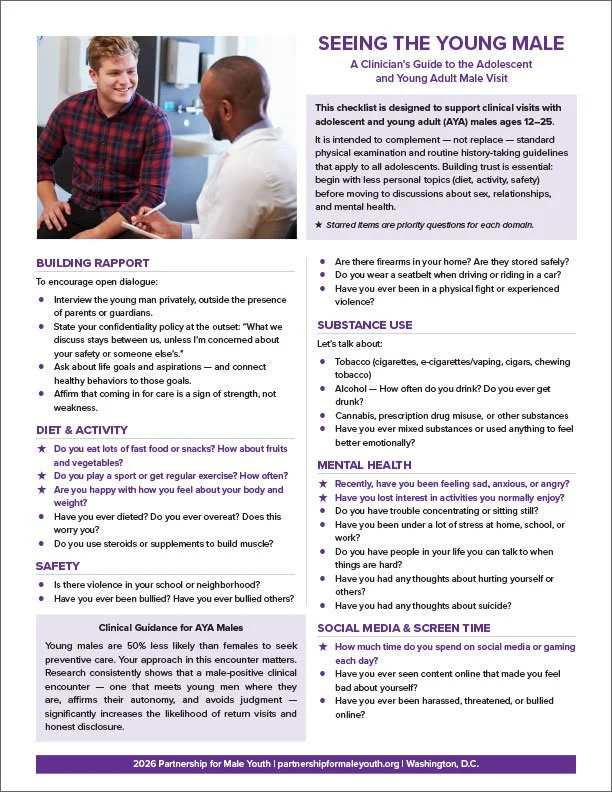
A Clinician’s Guide to Adolescent and Young Adult Male Visits
Designed specifically for clinicians who see adolescent and young adult (AYA) males ages 12–25, this two-page guide provides practical, evidence-informed support for one of healthcare's most underserved patient populations. Young males are 50% less likely than females to seek preventive care — and when they do come in, the quality of that encounter matters enormously.
Young Male Health: Fast Facts
The PMY Fast Facts series highlights the urgent, underrecognized health risks facing adolescent and young adult males. Topics include mental health, substance use, body image and eating disorders, sexual and reproductive health, and violence and trauma. Each brief underscores how AYA males often "age out" of pediatric care without a clear entry into adult medicine—leading to major gaps in screening, diagnosis, and support. Clinicians are encouraged to recognize the unique presentations and risk profiles in young males (such as externalized depression, high-risk sexual behavior, or disordered bulking practices), and to create more accessible, affirming pathways to care.
These factsheets serve as both awareness tools and practical guides for improving outcomes in this underserved population.

Sex and the Male College Athlete

The Partnership for Male Youth’s 2024 brochure highlights the critical importance of sexual health awareness among adolescent and young adult (AYA) male athletes, particularly in college settings. Research shows these young men often engage in high-risk sexual behaviors while holding misconceptions about STIs and prevention methods. The brochure outlines the prevalence and symptoms of common STIs, encourages regular screening, and promotes access to healthcare through campus resources, telehealth, and PrEP for HIV prevention. It aims to equip healthcare professionals with the insights necessary to better counsel and support this population.
Talking to Parents About HPV
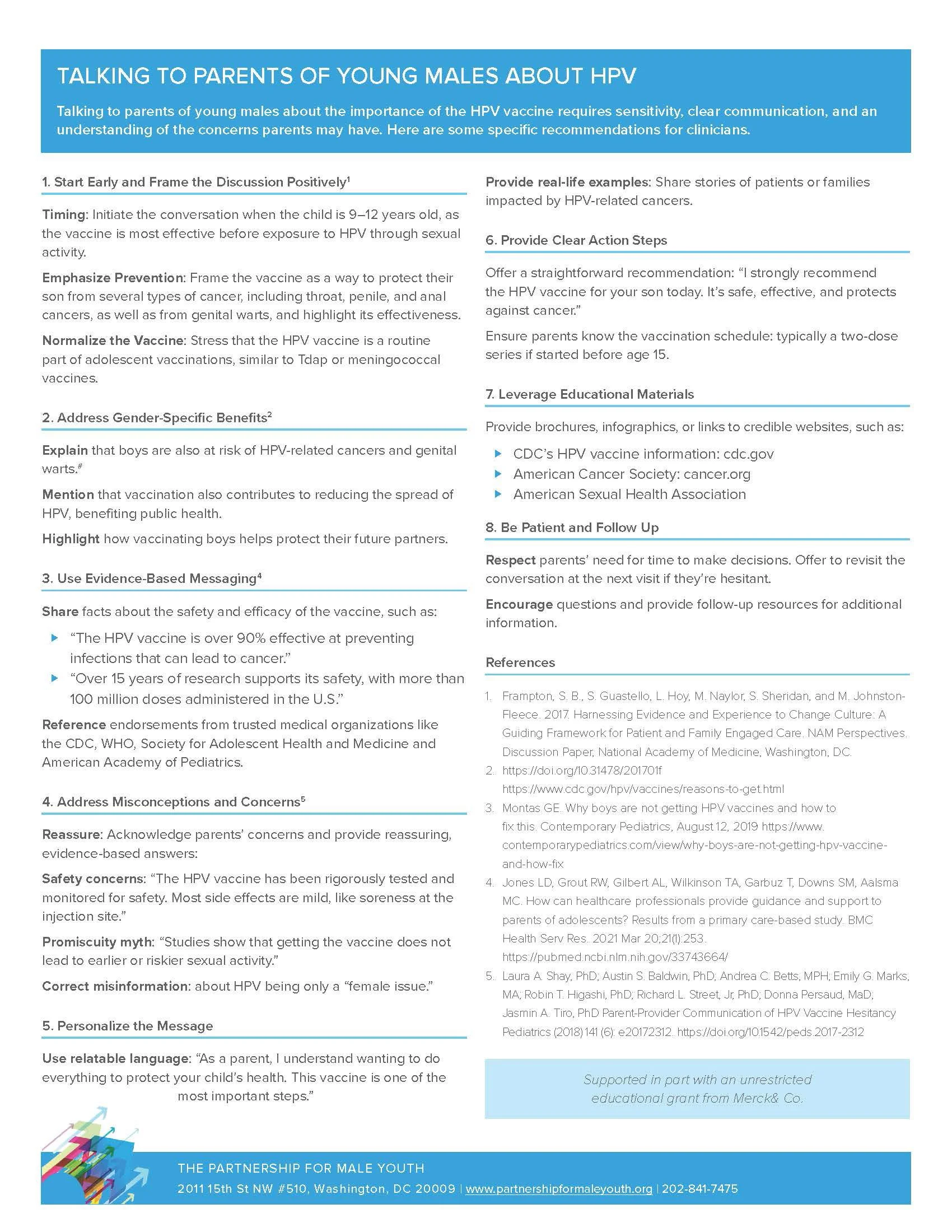
Clinicians play a key role in increasing HPV vaccination rates among boys. This guide outlines how to talk with parents using clear, confident messaging that normalizes the vaccine, emphasizes its cancer-prevention benefits, and addresses common concerns. Recommendations include starting conversations early (ages 9–12), highlighting gender-specific risks, providing real-world examples, and sharing evidence-based resources. By offering strong, empathetic guidance and reliable follow-up, providers can help ensure more young males are protected against HPV-related cancers.
Unrecognized Depression in Adolescent and Young Adult Males
Summary: The State of Health of Adolescent and Young Adult Males in the United States – Unrecognized Depression: A Review of Research and Recommendations.
This report examines the ongoing issue of unrecognized, underdiagnosed, and misdiagnosed depression in adolescent and young adult (AYA) males. It emphasizes the need to better understand how depression presents differently in males, especially at the intersections of gender, race, ethnicity, socioeconomic status, and sexuality. Key recommendations include improving assessment tools to account for male-specific symptoms and coping behaviors, adopting individualized and culturally responsive care, and challenging masculine norms that discourage emotional expression.
The report argues that individual-level solutions are not enough and calls for a broader, systems-level approach that addresses the social, cultural, and institutional factors contributing to this crisis. True change requires both empowering AYA males to speak about their mental health and transforming the environments that make it difficult for them to do so.