
Research
Data compiled by The Partnership for Male Youth show that young males ages 10–25 face health risks that are specific to them or concentrated among them, yet the health care system is not built to reach them. CDC surveillance, peer-reviewed research, and national clinical guidelines show that young males ages 15–19 die from leading causes of death at roughly 2.4 to 6.7 times the rate of females. In 2023 they accounted for nearly nine in ten new HIV diagnoses among 13- to 24-year-olds. Boys also have about twice the rate of high blood pressure that girls do (12.9 versus 6.5 percent). Yet young males are less likely to have a regular source of care, receive preventive services, or complete vaccine series. Lifelong health patterns take shape in these years, so these gaps lead to preventable chronic disease and premature death. Young male health deserves recognition as a distinct field of practice, research, and policy.
Research
Overlooked Health Risks and Care Gaps Facing Young Males
Adolescent and young adult (AYA) males ages 10–25 face health risks that are often missed, misread, or left untreated. Some conditions present differently in males than in females; others go undetected because there is no routine screening pathway or regular point of entry into primary care for this population. This briefing summarizes those risks and gaps across five areas: mental health, accidents and violence, cancer, physical health, and sexually transmitted infections.
Health Risks Specific to and Concentrated Among Young Males
Young males ages 10–25 face two kinds of health risk that young females do not share in the same way. The first, and by far the larger in population terms, is a set of conditions that affect both sexes but fall much more heavily on young males. The second is a shorter list of conditions that, because of male anatomy or the single X chromosome, occur only or almost only in males. A third group of male-skewed conditions begins in early childhood or produces its harm later in life, and these are noted separately. Wherever possible, the figures below are for ages within the 10–25 range, and each figure gives the ages it covers.
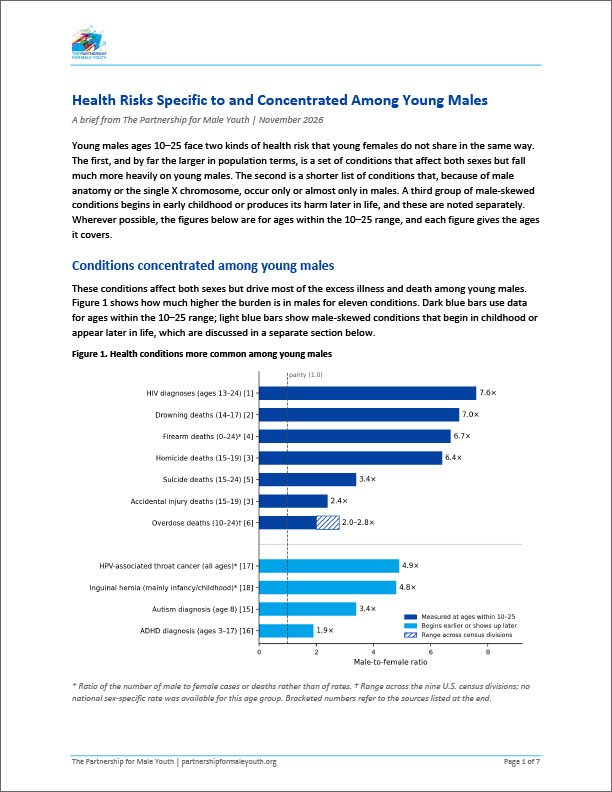

Health Conditions More Common Among Young Males
This chart from The Partnership for Male Youth compares male-to-female ratios for eleven health conditions, with a dashed line at 1.0 marking parity. Among young males ages 10–25, HIV, drowning, homicide, and firearm deaths run roughly seven to eight times higher than among females. Suicide, accidental injury, and overdose deaths run two to three times higher. Related male-skewed conditions include HPV-associated throat cancer, inguinal hernia, autism, and ADHD. Young males carry the greater burden in every case. Sources are listed at the bottom of the chart.